
THE PRACTITIONERS WHO ARE DOING IT ALL
I’m sure branding is a word you know and use in your vocabulary but that doesn’t mean you actually know what it is. Can you use it in a sentence? Sure. But if right now I asked you to define it could you do it? Would you stumble for a second? Or say something along the lines of “well it’s your logos and colors and stuff”? Or maybe you slowly come to the realization that you’ve conflated marketing and branding this whole time?
And I don’t say that with any intention of making you feel bad for not knowing. I don’t remember there being a Branding 101 in my DPT curriculum. You just wanted to help people get stronger and healthier but suddenly you’re also expected to have an entrepreneur hat, a marketing hat, a social media coordinator hat…it’s a fuck load of hats. So let me try to simplify the branding hat so you know what it is, why you should care, and how you can use it to build your business or platform.
What Is A Brand?
First we’re going to start with the noun. Your brand, whether it’s a personal brand or a professional brand, is what people think about you. It’s your reputation. It’s the feeling people have when they think of your business or walk through your doors. It’s how people feel when they interact with you or your content. It’s this slightly elusive, impossible to define thing that people think of you. But that doesn’t mean we don’t try to define it. That’s where the verb comes in.
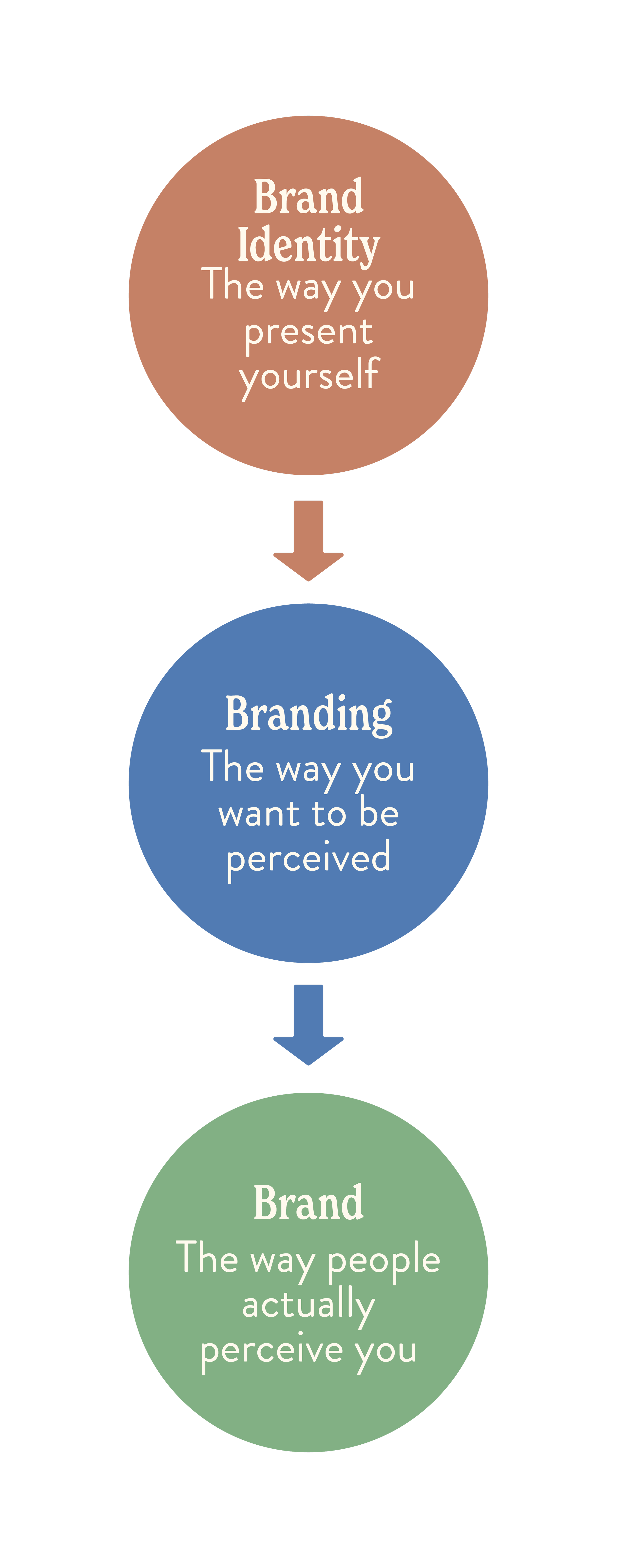
Branding as a verb is the act of trying to influence what people think of you. I like to think of branding in two parts. The first is identifying your brand identity. You lock down who you are, what you value, and what you want to portray to your audience. The second is the execution. It’s taking those components you identified and making sure that you are representing yourself accurately at every single touchpoint with your audience. You do this over and over and over again to send a consistent and authentic message.
Now are there limitations? Of course. There’s only so much you can do to influence someone’s perception of you. People will always form their own thoughts and opinions. But it’s better to try than leave it up to chance. So when we talk about branding, it’s the effort you put in to help your audience know exactly who you are, what you do, who you help, and how you help them.
How Good Branding Benefits Your Business
The one thing that companies with good branding have in common is consistency, even if they take a wildly different approach to their brand. While Apple uses minimalism to portray sophistication and cutting-edge technology, Nike uses bold slogans, typography, and imagery to make you feel empowered and connected. In the same space, Starbucks manages to provide a clean, refined approach to coffee while Dunkin is going to promote color and fun. No matter what your brand is, the important thing is that you’re consistent with it.
Being consistent with your brand accomplishes a couple of things and the first is huge if you’re working in the health and performance field: it builds trust. If you’re able to consistently present yourself so your audience has a strong understanding of who you are and what you stand for, it’s much easier for them to trust you. If they get mixed messaging, feel disconnected to you, or never know what to expect, it’s going to be much harder to trust you. And you know what’s really important when people have an injury and need someone to help guide them back to health? Trust.
Consistent branding also enhances your messaging. We live in a world where you only have a couple of seconds to make an impact. If in those few seconds you’re presenting different versions of yourself or saying something that contradicts what you said last, your message probably isn’t landing. It’s why I never shut the fuck up about having a quick elevator pitch locked in for when someone asks “so what do you do?” and all of my clients get a visual identity that enhances their messaging. Consistency in branding makes sure your message is heard.
And lastly, a consistent visual identity will make you look more professional. The more professional you look, the more you can charge for your product or service. I don’t make the rules. You don’t have to like it but we live in a world where nice looking things are more expensive. Having a strong visual brand that is executed consistently will make you look like you know what the fuck you’re doing. It helps if you actually know what the fuck you’re doing but I can’t help you there.
How To Wear Your Branding Hat
The good thing about branding is that you don’t need to be an expert to be pretty effective at it. Investing in your brand and hiring someone (like me) to help define your brand, create a cohesive visual identity, and develop a strategy for implementation will always pay for itself. I highly recommend it if you’re at a stage where it makes sense for you and your business. But if you’re just getting started or don’t have the budget, there’s a lot you can do on your own. To start you’re going to download my Free Branding Checklist because it’s free. Then you’re going to get to work establishing your brand identity. You’ll have your visual elements and your non-visual elements:
NON-VISUAL ELEMENTS:
Mission/Values: in theory if you’re starting a business you should start here anyway so hopefully this feels redundant. From a branding perspective, make sure that the values you’re choosing are well-identified, concise, and something you can make clear when engaging with your audience.
Target Audience: again, something you should be doing anyway but rather than focusing on your traditional demographics (age, gender, location, income, etc.) I highly suggest thinking of your audience as human beings. Meaning, human beings (like ogres) are like onions and you need to peel back the layers to really consider their values, goals, concerns, interests, and things that would make them more inclined to work with you. That’s what matters most.
Personality: this is where I see a lot of people make mistakes. Just because you know who you are, doesn’t mean you know how you’re perceived. What I’m not saying is that you should change your personality to better suit others. What I am saying is that you should really take the time to understand what people think of you and identify which aspects of your personality you want to amplify with your brand strategy.
Tone of Voice: this one’s especially important if you have multiple staff members or methods in which you engage with your audience. How you/your business speak to your audience should be generally consistent enough to not cause any sort of confusion. And I should remind you that this is any interaction with your audience. If you hired a Gen Z-er to run your social media account and it’s filled with goofy, trendy, dances and memes but you’re rather serious with your patients, that could be a confusing message for your audience.
Brand Story: your brand story is sort of like a bio mixed with an origin story mixed with how you help your audience. It should touch on who you are, why you started your company, what it means to you, and what it means for your audience. It’s something you should have refined and perfected and then find ways to implement this story throughout your audience touch points so they really feel like they get to know you.
Slogans/Taglines/Messaging: I hate calling this a slogan because I know how corny it sounds but you should have things you say over and over again to make sure they stick and increase the chances people actually recognize you/your business/your content. It doesn’t need to rhyme, you don’t need a jingle that accompanies it, you just need things that you say consistently that resonates with your audience.
VISUAL ELEMENTS:
Logo Suite: if you’re a start up personal brand, you may not need a logo suite. But if you’re running a business I highly recommend a minimum of 3 logos and hiring someone who can help advise you in the design and execution of your logos.
Color Palette: I know I won’t shut up about colors but they’re actually really important when it comes to branding. Humans are simple creatures drawn to pretty things. Even if you don’t have a design eye, colors are something that you can identify easily. Having a consistent color palette that you use regularly will drastically improve your audience’s ability to recognize your content as yours.
Typography: this is just a fancy word for fonts. I don’t want to downplay them because choosing a great header font can make a really big impact on your visual identity but the point here is choose 2-4 that enhance your brand and stick to them.
Photography/Videography: invest in this one. Hire someone to take high quality photos and videos of your space and your care because your audience will place a lot of value in it. The easiest way to look professional is to hire someone who takes professional photos and videos. The quickest way to look like you don’t know what you’re doing is to take photos on your phone.
Brand Elements: this could be a lot of things but in general think of any sort of design that is used across your content. It could be a particular shape, a pattern, a texture, a sticker…anything that adds some visual interest. When done well, brand elements are an incredible way to set you apart from competitors (because most people aren’t using them) and to make your content easily identifiable as yours.
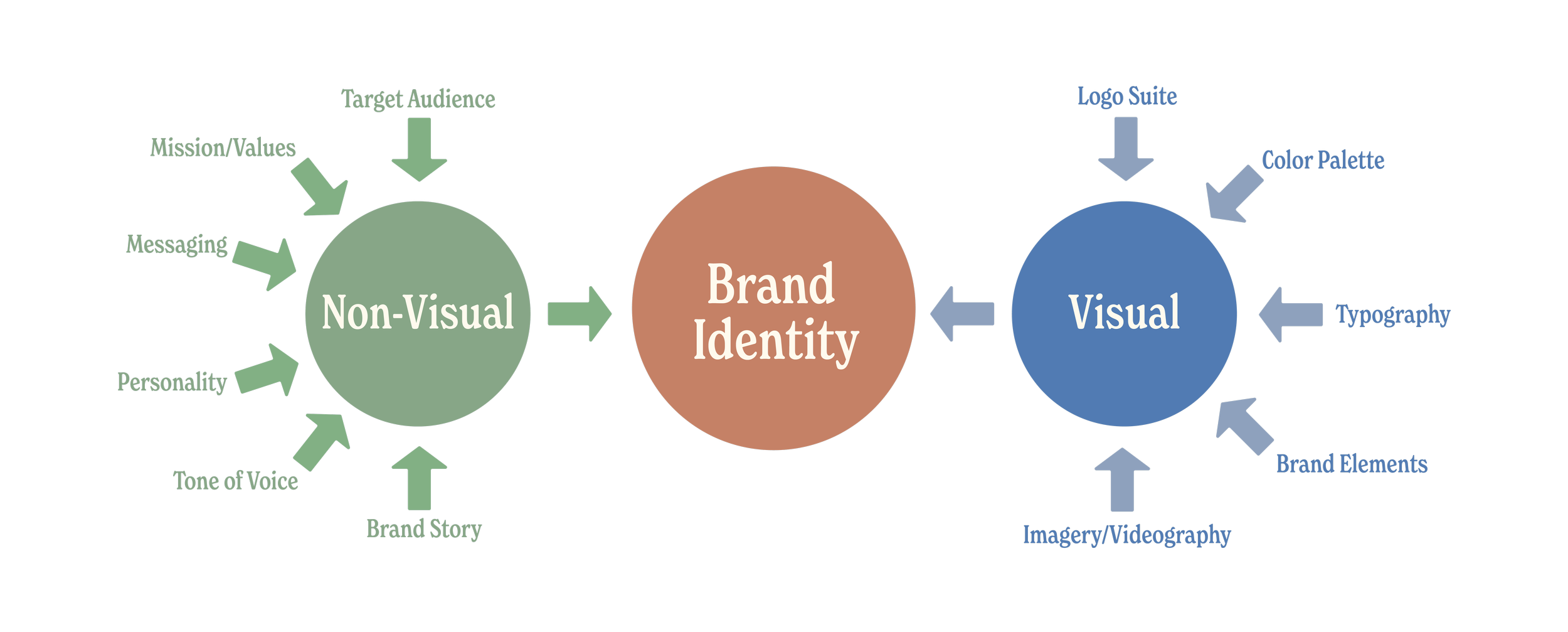
Now remember, the first part of branding is identifying all of that shit. The second is executing it over and over and over again because good branding is consistent branding. All of these components are going to be included when you create your website. When you put out an Instagram post. When you develop an ad. When you speak with a patient. Your brand doesn’t get to take a break. Your job when wearing your branding hat is to be as consistent as possible with everything you do.
It’s a hat you can absolutely wear and wear it well. There is massive value in hiring out to assist with your visual identity and help you with a strategy. Hi, that’s me. But if you’re just starting out, you don’t have a huge budget, or you’re really into gathering hats hopefully this will get you started. If you want more resources I have guides available, a Canva course for your Instagram strategy, and of course I really enjoy designing pretty things.
ABOUT THE AUTHOR:
ERIN KELLY-SULLIVAN

As a washed up physical therapist I know a thing or two about physical therapy. After contributing to the rise in burn out rate, I turned to graphic design and now build brands for my colleagues.
In a field of unoriginal logos and boring website design, my goal is to educate healthcare practitioners on how to use their brand to better position their services and stand out in an oversaturated field.
READY TO BOOST YOUR INSTAGRAM PRESENCE?
This course will give you the foundational design concepts to create visually impactful posts to help boost your brand.
Build your strategy, create your templates, and watch your brand take off.
JOIN THE NEWSLETTER
Sign up for the “whenever I get around to it” semi-regular email newsletter.
READ MORE

WANT MORE HELP LIKE THIS? FOLLOW ALONG ON INSTAGRAM:

If you’re still not quite sure what branding is, this read is for you. Everything you need to know, in a way that makes sense to you, in a judgement-free zone.