
Physical Therapists Are Not The Heroes
AND YES THAT’S MEANT TO BE PROVOCATIVE
As a physical therapist, I’m in a unique position to really talk shit about physical therapists. We love our degrees, our credentials, and reminding people that we’re doctors. We write stuffy bios that read like a resume and we want you to know that we’re experts.
Which is why when we market ourselves, we tend to position ourselves as the hero that swoops in to solve a problem. The letters behind our name, our extensive education, and our expertise in human movement are what will get you out of pain. We position ourselves as the hero. But we shouldn’t be.
The Customer Should Be The Hero

You’re Donkey
To be clear, this is not my opinion. Expert marketers and business analysts will tell you that when formulating your brand story, you want to position the customer as the hero. We’re all self centered by nature so when we’re considering purchasing a product or utilizing a service, we want to see ourselves in advertisements. We want to see how it will improve our life. We’re the hero in our own story so it makes sense to put the customer as the hero to better sell it.
Now there’s always going to be nuance, and you could make the argument that there are businesses that act as the hero and are highly successful. But we’re talking about physical therapy. The patient is quite literally the hero.
The Patient Is Always The Hero
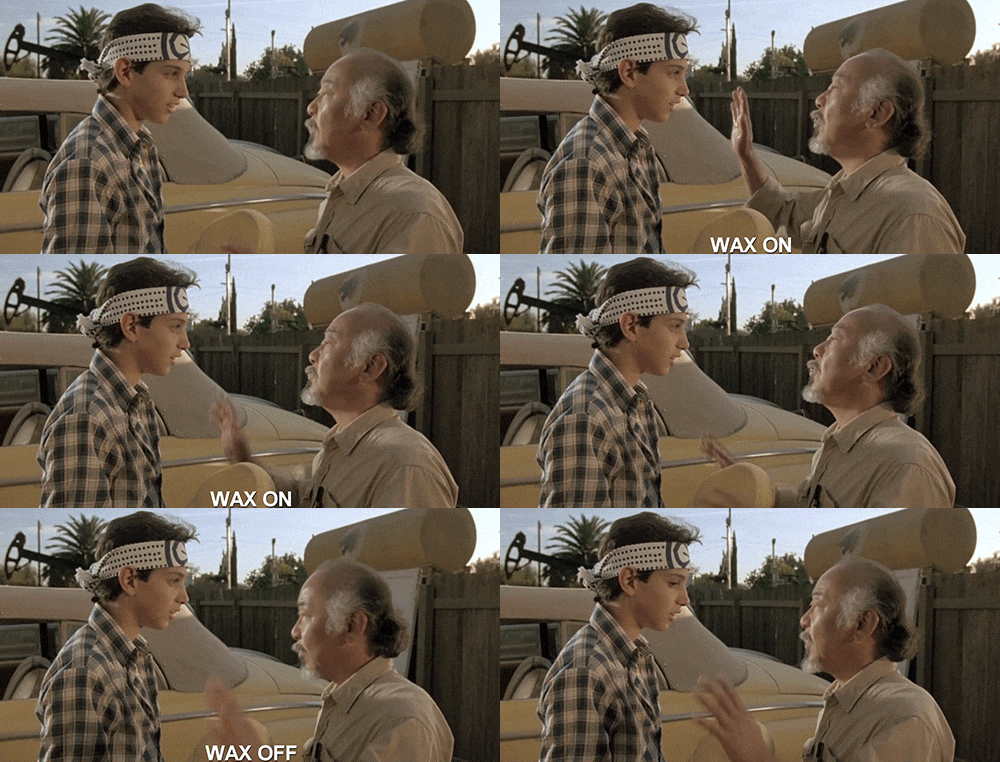
You’re Mr. Miyagi
As important as we are in helping the patient get back to what they love, we’re not lifting the heavy weights. We’re not relearning how to walk or run. We’re not building muscle or training our cardiovascular system.
The patient is literally the hero in this story. They put in a lot of hard work to come back from an injury or surgery and should absolutely feel like a badass, empowered hero. Which makes physical therapists the guide.
Physical Therapists Are There To Guide The Hero
Physical therapists are the mentor guiding the patient towards success:
You’re Gandalf, not Frodo.
You’re Glinda, not Dorothy.
You’re Obi Wan Kenobi, not Luke Skywalker.
You’re a guide, providing them with the tools and support they need to be successful. Yes, your knowledge and expertise are important. You’re programming, problem solving, and thinking critically to help your patient reach their goals. So I’m not saying you’re unimportant, but I am saying you’re not the hero.

You’re Queen Clarisse Renaldi
So Maybe Shut The Fuck Up About Yourself
I get it, it’s easier to talk about yourself. You talk about what you know which is yourself. You flaunt all of your education/credentials, your medical terminology, and your experience to show that you’re the best. You’re so smart. You’re a doctor.
Honestly a surgeon might be able to position themselves as the hero: they do the surgery and more or less wipe their hands clean when it’s over. Physical therapists don’t. We’re deep in the trenches with the patient, helping them through the fear, setbacks, and heartbreaks of rehabilitation. By only focusing on ourselves, we miss out on the opportunity to connect with our audience, the real hero.
Solidify Yourself As The Guide

You’re Morpheus
When you’re interacting with your audience, you want to position yourself as a guide who is both empathetic (I get it) and authoritative (I know how to help). The key is doing this in a way that your experience and knowledge is the supporting role. You mentor the hero (your patient) to overcome a problem and ultimately become successful. But we can do better than “our hero got rid of their pain and lived happily ever after”.
Your Hero Isn’t One-Dimensional
Everyone coming to PT is likely injured and/or in pain. If your copy is focused on “Get Out Of Pain!” you just sound like a shitty car salesman. Our hero has depth with underlying fears and concerns. You can build a much more meaningful connection with your audience if you’re able to tap into an emotion.

You’re Rafiki
If I head to your website and the first big thing I see is “Get Out Of Pain”, that’s fine I guess but I’m expecting every physical therapist to be able to do that. So what sets you apart? What makes me want to pursue your services over someone else? If instead your website header said “Get Back To What You Love” or “Don’t Let An Injury Sideline You”, I’m in. I feel seen and want to know more.
And because I’m sick of seeing shitty, self-obsessed copy, I’m even going to help you think deeper about what emotions, concerns, and goals might push someone to seek physical therapy outside of pain. We can do better.
FEAR BASED
Fear of re-injury or a sense of fragility following an injury
Fear of missing out on their sport or getting left behind
Fear of aging, losing independence, or missing out on life events
LIFESTYLE BASED
The athlete who feels a sense of identity loss upon their sports career ending
The worker with a physically demanding job whose livelihood relies on their ability to show up
The aging individual who doesn’t know how to take care of the body that needs more care and attention
The new mom who has gone through a major life change and isn’t sure how to adjust to this new normal
SYSTEMIC BASED
Frustration with the healthcare system and not feeling seen or heard regarding their concerns
Confusion with the misleading and conflicting information from “experts” online
Desire to break out of the cookie cutter, 3 sets of 10 type of rehab and training
Pressure from teams/coaches/parents to get back to sport as soon as possible
PERFORMANCE BASED
When an athlete feels they’ve plateaued and are seeking what will push them to the next level
When an active, older adult is used to being treated as frail and aging but wants a space that will treat them like an athlete
Shift The Focus From Yourself To Your Audience
As you can see there are so many other driving factors behind our patients. If all you’re tapping into is pain, you’re missing the point. By understanding these underlying factors, we’re able to build a real connection with our audience. Our hero is multi-dimensional. Once we see our audience as real people with fears, concerns, and goals, we can establish ourselves as the empathetic guide who will help them overcome a problem and ultimately be successful.
ABOUT THE AUTHOR:
ERIN KELLY-SULLIVAN

As a washed up physical therapist I know a thing or two about physical therapy. After contributing to the rise in burn out rate, I turned to graphic design and now build brands for my colleagues.
In a field of unoriginal logos and boring website design, my goal is to educate healthcare practitioners on how to use their brand to better position their services and stand out in an oversaturated field.
READY TO BOOST YOUR INSTAGRAM PRESENCE?
This course will give you the foundational design concepts to create visually impactful posts to help boost your brand.
Build your strategy, create your templates, and watch your brand take off.
JOIN THE NEWSLETTER
Sign up for the “whenever I get around to it” semi-regular email newsletter.
READ MORE
WANT MORE HELP LIKE THIS? FOLLOW ALONG ON INSTAGRAM:

Not sure what to post next? Here are 5 types of posts that are non-negotiable for physical therapy clinic owners.